Is there a Chinese book I can recommend to beginners for learning about Linux, but that is not entirely about server operations and maintenance knowledge?
Recently, while attending a Software Liberty Association Taiwan member meeting, I learned about Trying LINUX on a Computer: Hardware Test Notes written by member Chao Wei-lun, so I downloaded it and took a look. I found it pretty well written.
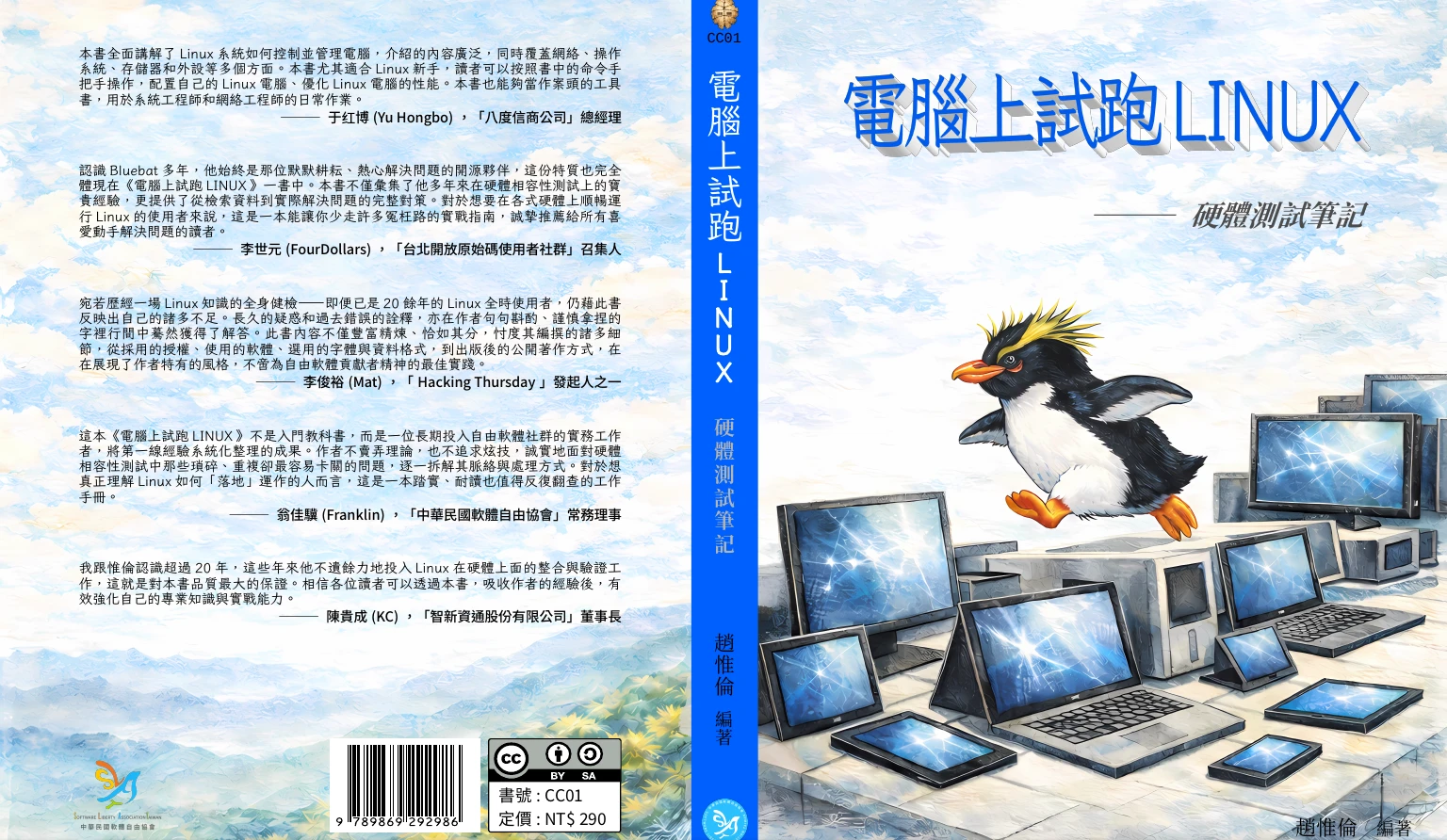
Trying LINUX on a Computer: Hardware Test Notes, written by Chao Wei-lun (bluebat, FSF member) and published by the Software Liberty Association Taiwan, is a very detailed Linux reference book. It combines a bit of computer science basics with operational knowledge of modern Linux systems, helping readers understand how Linux runs.
The subject of this book is not the operating principles of the Linux kernel. Instead, it analyzes problems encountered when operating Linux in practice, and explains how to debug system services. Compared with 鳥哥的Linux 私房菜, this book talks more about situations you encounter when actually dealing with hardware.
The book uses the latest Fedora 43 as its example, explaining the operating principles of Linux boot flow, graphics systems, audio systems, network connections, power management, and more. After briefly introducing the principles, it supplements them with actual command operations, using Systemd as the main means of system management. Users interested in everyday use of Linux free software can treat this as a practical reference book and consult it to understand what commands can help debug the system when something goes wrong.
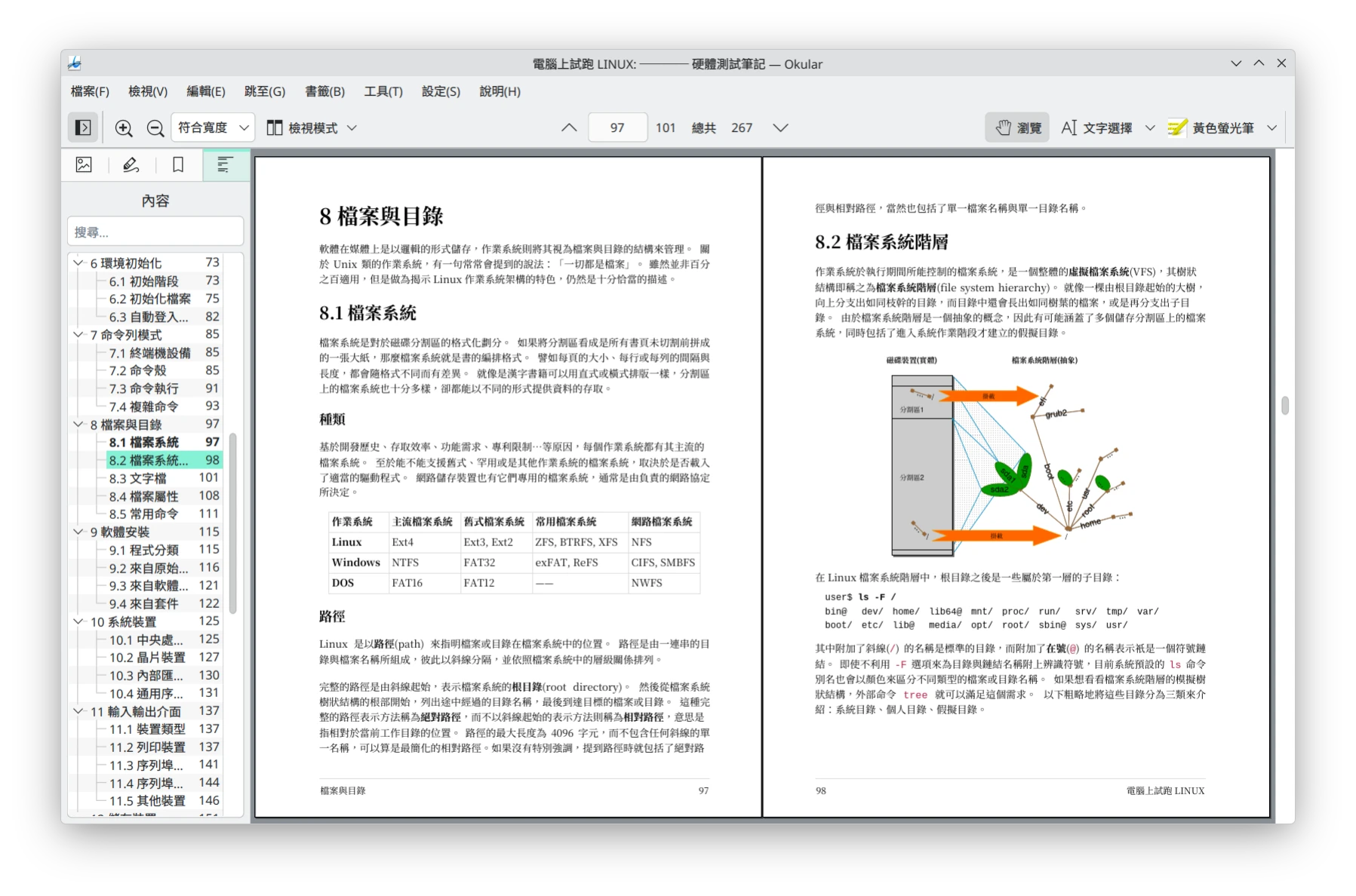
However, the author’s explanations are still mainly command-based. Although the FreeDesktop XDG standards are mentioned, there is relatively little discussion of graphical operations in Linux desktop environments such as GNOME or KDE Plasma, which is quite a pity. And to a large extent, it still discusses operations in the X11 environment, without saying much about Wayland technology as the future trend.
The Linux desktop environment with the highest market share is GNOME. Although the GNOME desktop often randomly moves UI positions in every version update to mess with users, I think the desktop workflow has already “settled” after GNOME 40. It should be possible to explain GNOME’s characteristics a bit; there should not be too much difference caused by Linux system version updates.
This book is published in both print and electronic editions, and the full text can be obtained on GitHub. The book is licensed under CC BY-SA.
Source code: https://github.com/cc-books/testnotes
Buy the physical book: 電腦上試跑Linux: 硬體測試筆記 - 天瓏網路書店