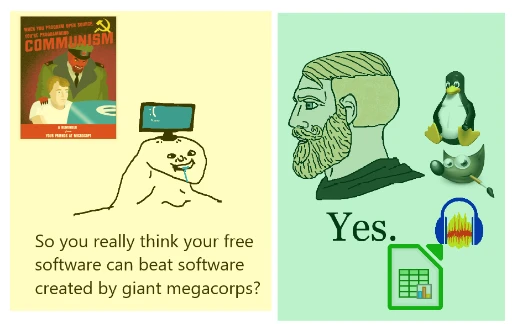
If You Pursue Free Software on Linux, Should You Also Insist on Playing Open Source Games? Sharing a List of Open Source Games
Should you stick to playing free and open source games instead of proprietary ones when using free software on Linux?
Once upon a very long time ago, you owned the game, and the game owned you.
But now it is no longer like that.
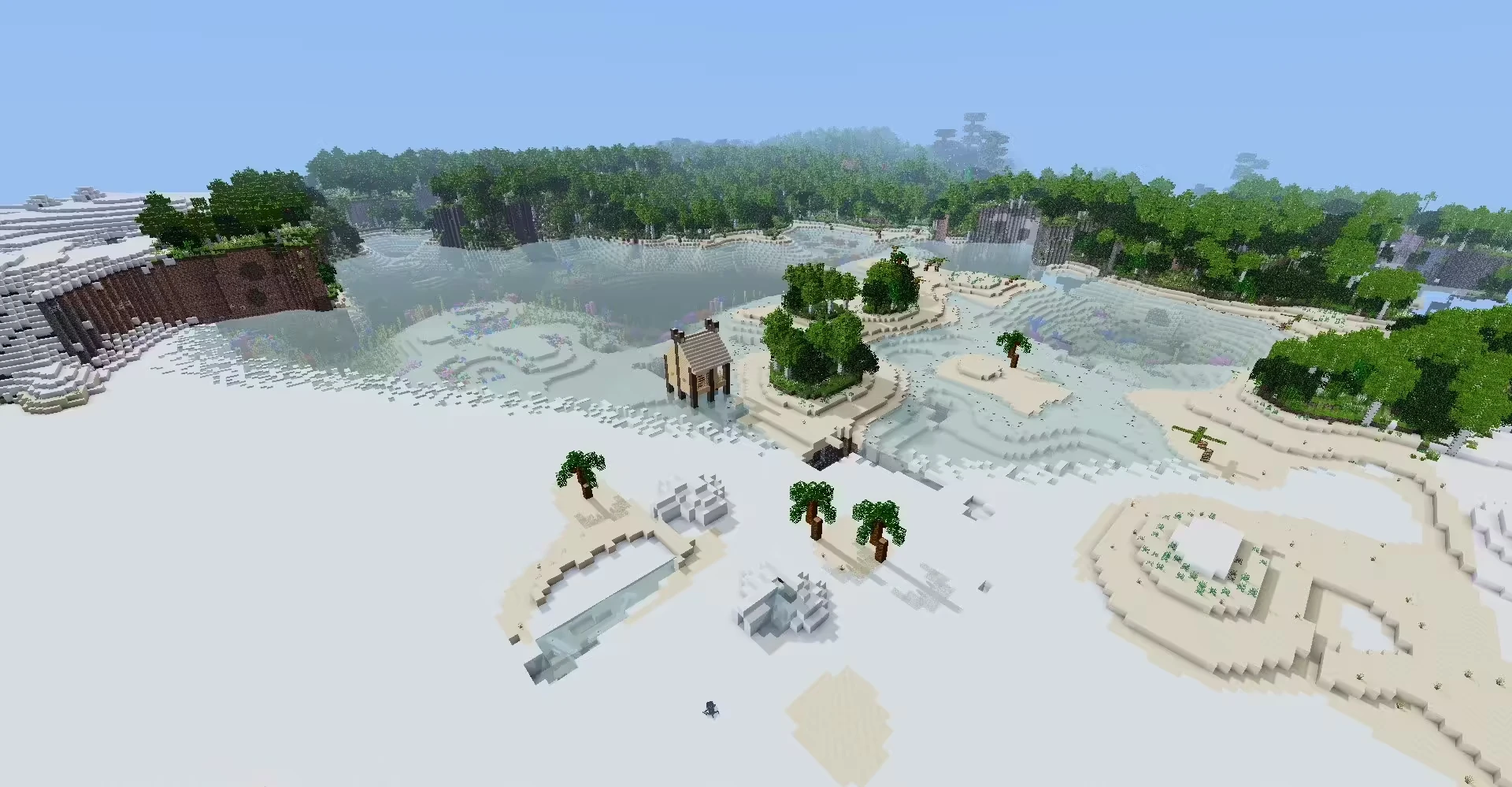
In the past, I once published a hot take: you should not play Minecraft, because it is proprietary software and Microsoft has ruined it, especially Bedrock Edition, which added a pile of mobile-game monetization elements. After founder Notch left, Mojang had already lost its way!
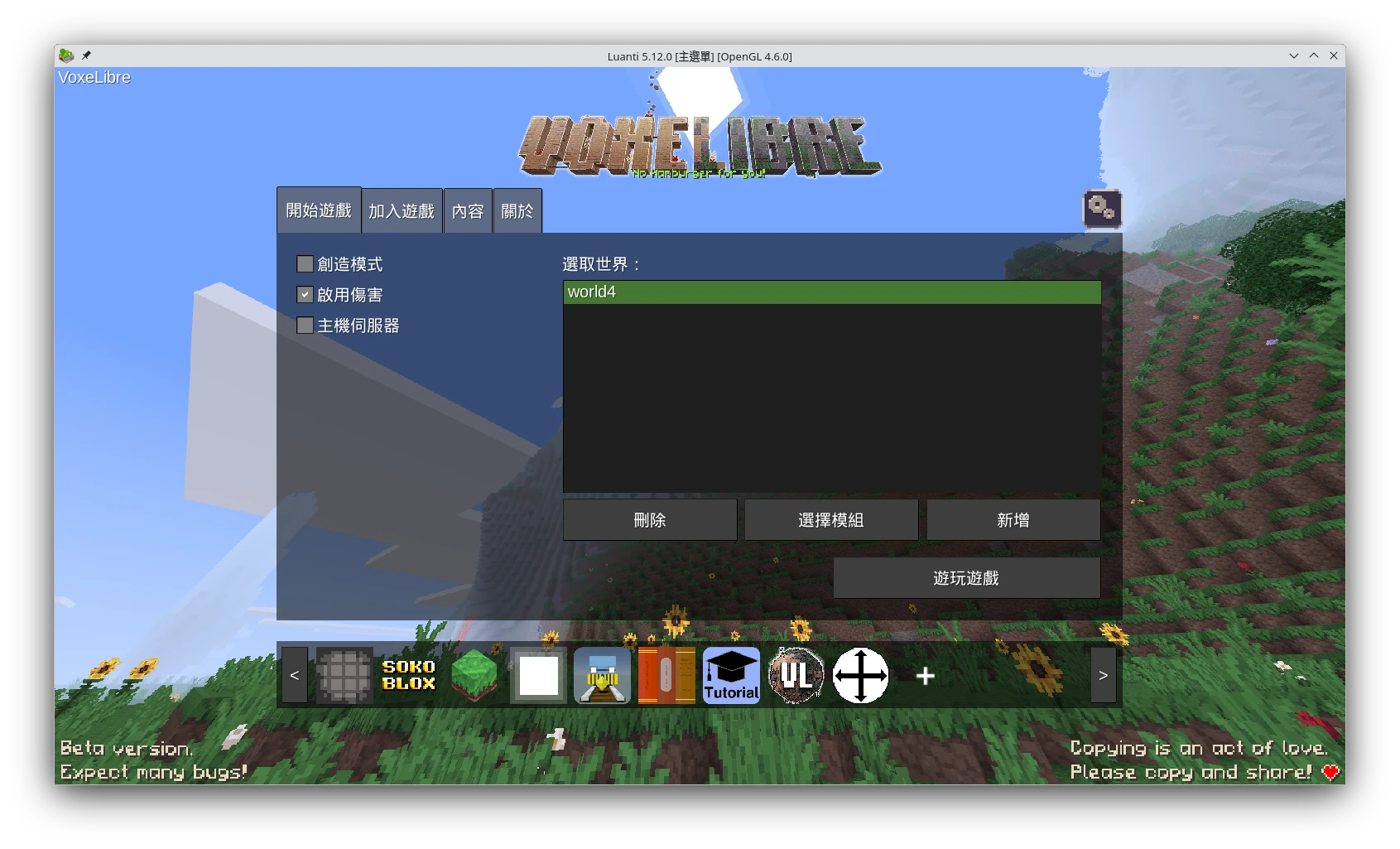
You should switch to Luanti, a truly free block sandbox game (the point is freedom, not zero price!) It is cross-platform, written in C++, and is a Minecraft alternative. Inside it there is a subgame called VoxeLibre that can reproduce 99% of classic Minecraft gameplay, along with more mods than you can ever finish installing, plus built-in shader effects.
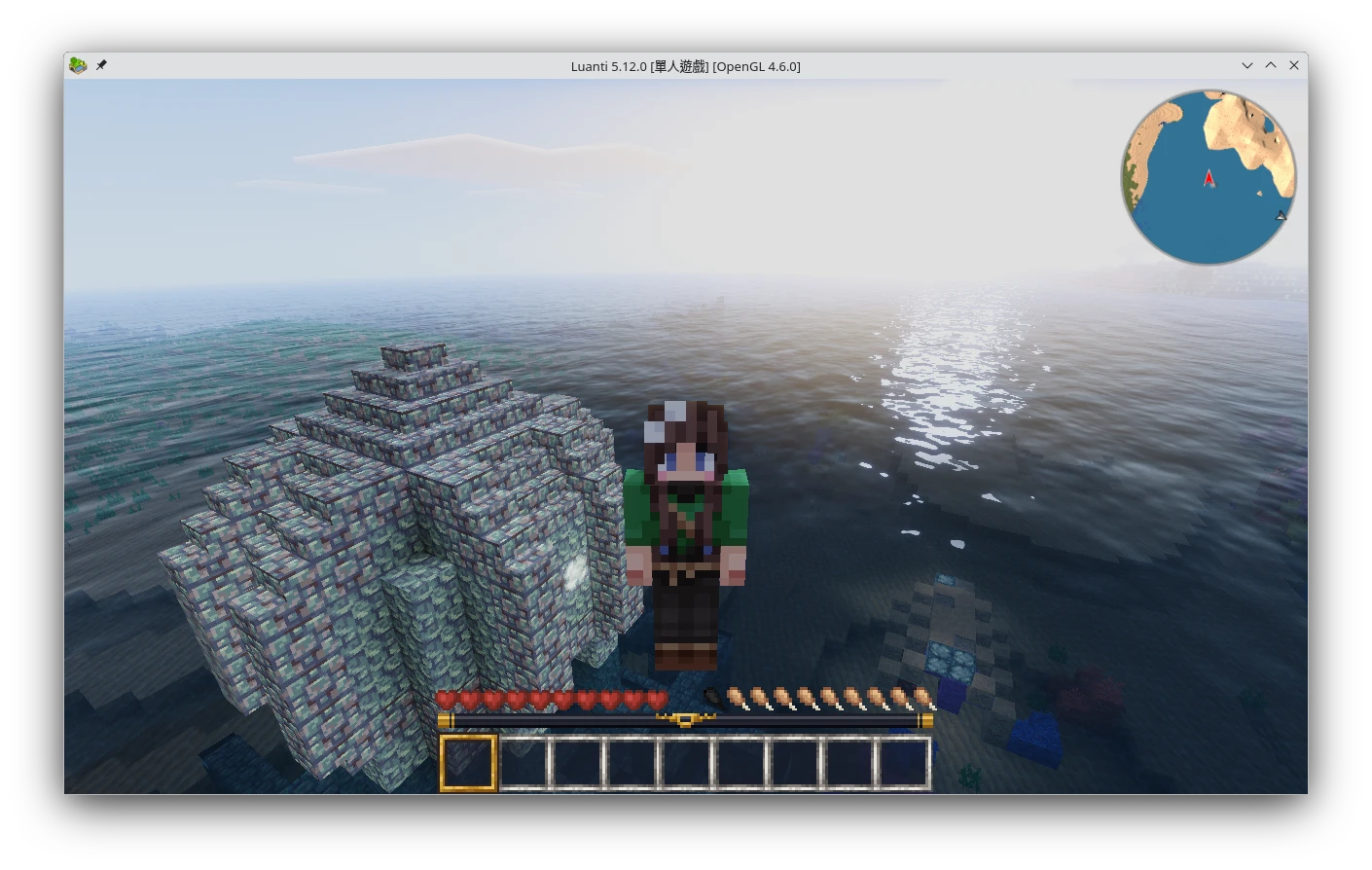
They are both about building houses, but playing Luanti makes my conscience feel better, ha! This is quite close to the level of madness of People for the Ethical Treatment of Animals (PETA). As a 10-year Minecraft PE veteran, switching to Luanti feels liberating!
If you use GNU/Linux, this free system, yet still install proprietary software, then impurities have mixed in and must be filtered out! As the saying goes, my Way is unified by one principle; software should all use free solutions!
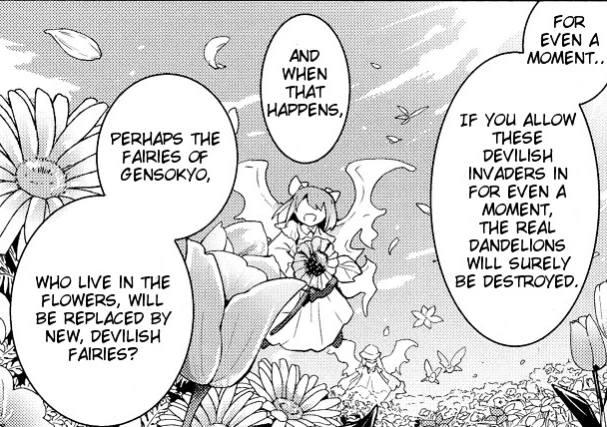
“As long as you let one evil flower bloom… in the end, all of Gensokyo will be polluted. The fairies living inside the flowers will also be replaced, won’t they?” (Source)
But is this really good? What exactly are we pursuing?
1. Definition of Free Software Games #
My own definition of free software games/open source games:
So-called games that pursue free software generally mean the code must be open source, use an open source license, and conform to the four freedoms advocated by the Free Software Foundation. The game itself must also be completely free, not controlled by DRM or restrictions on players’ rights.
The assets inside the game should use Creative Commons licenses and allow free reuse.
If a game allows players to install mods but the base game is still released as closed source, it still does not count as a free game. Examples include The Elder Scrolls, Hearts of Iron, Grand Theft Auto, Minecraft, Quake, Red Alert, and so on.
Even if you use an open source console emulator to play a game, if the ROM itself is still closed source, it still does not count as a free game. For example, playing Nintendo 64 games through RetroArch.
Games developed with closed source game engines should not be considered free software games, such as those using Unreal Engine. There are many open source game engines, such as Godot and Irrlicht.
Seen this way, Steam, the greatest contributor to making Linux able to play games, is also the enemy of free software games. Although Steam Proton is open source and can help translate Windows games, making it widely loved by players, the Steam client itself is still proprietary software. Valve is a commercial company that only wants your money. We should break free from Steam’s control and manually use Wine!
In addition, considering that Steam recently changed its user terms to say that what you buy is the “right to use” a game, not ownership, whether Steam is willing to let you truly “own” games is debatable. In other words, the games you buy are not yours, and developers have the right to terminate online game services at any time.
2. It Sounds Nice, but It Is Very Difficult in Practice #
If you also pursue moral purity when playing games, it will be painful.
In the early days when I fully switched from Windows to Linux, I went through an ideological baptism from the Free Software Foundation. With the ideology of “freedom” at the helm, in an environment where all work used free software, even games had to pursue morally “nobler” choices.
Finding open source games is truly difficult. Many people have discussed why open source games cannot achieve success, and the reason is simple: they require a massive amount of work. There is a reason video games are called the “ninth art.” Sometimes, making a good game and making it popular with the public can be far more difficult than developing commercial software. To develop a game, you need to find a team responsible for every part of the game and pay them reasonable salaries. Otherwise, who is going to volunteer for you? From character design to script conception, all of it requires enormous time investment.
Even the most impressive engineer needs the support of an art team to make a good game. Omnipotent creators like Toby Fox (Undertale), ZUN (Touhou Project), and Scott Cawthon (Five Nights at Freddy’s) are exceedingly rare. Besides, even they are not so universally loving as to completely open source their own games.
Selling games is already difficult enough. Developers are already eating dirt, so what gives anyone the right to force developers to open source everything?! That is why open source games are rare. Even when they exist, few can win broad public affection.
3. Like Sea Bears, Open Source Games Really Do Exist #
Indeed, if you insist on looking, open source games do exist. See the Arch Wiki and LibreGame Wiki.
Also see this Steam curator’s game list: Libre & Open Source Games by LibreGames Group
But generally speaking, they are “not fun”, as they say. This is the conclusion I reached from serious study. Just like those games that emphasize being “educational”, when you overemphasize one aspect, you neglect gameplay. “Open source” is not a very attractive selling point in the commercial market either.
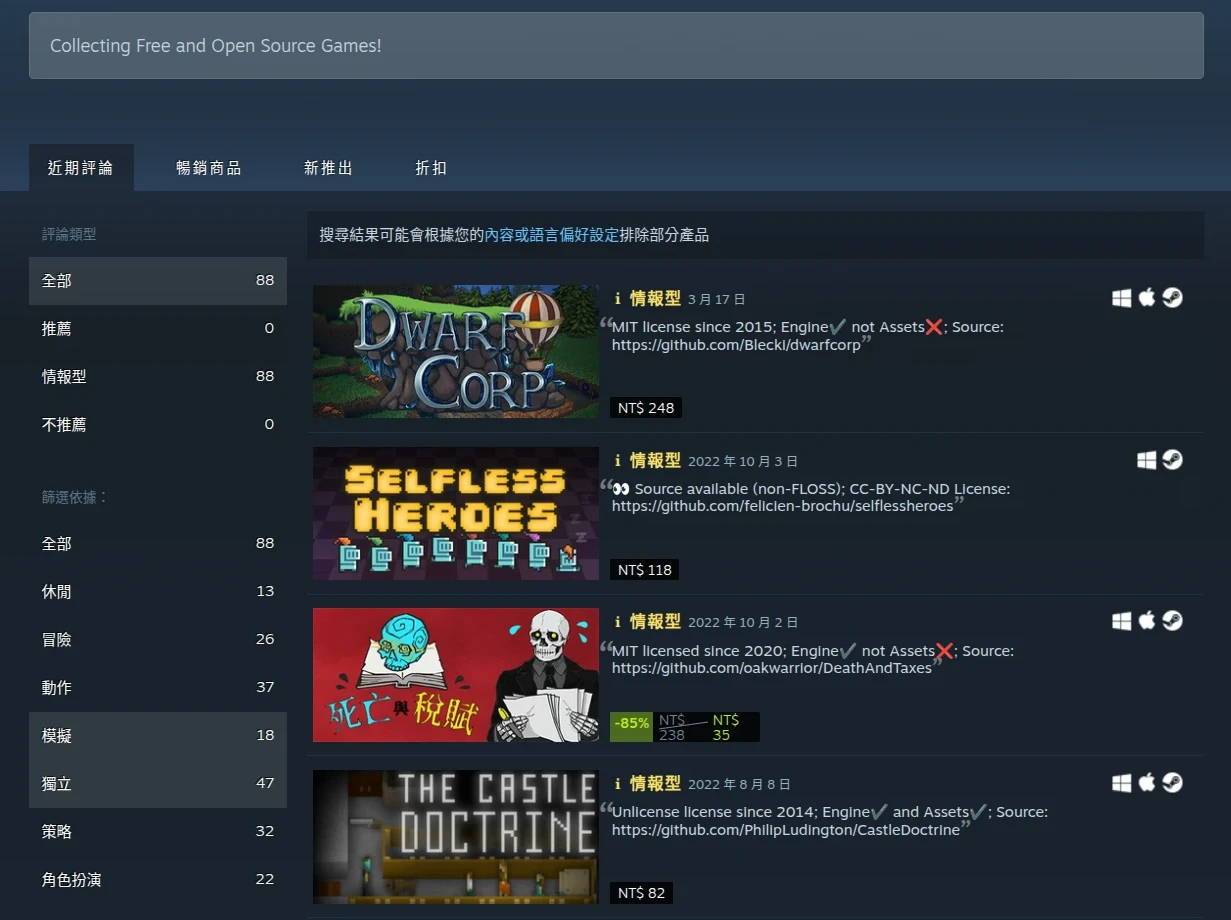
At least for me, not many hit the spot. Perhaps for some people they are hidden gems, but many just look unfun.
There are many open source 2D strategy or RPG games. Even though there are fine works such as Mindustry, 0.A.D, Endless Sky, Battle for Wesnoth, Freeciv, and OpenTTD, I am not very interested.
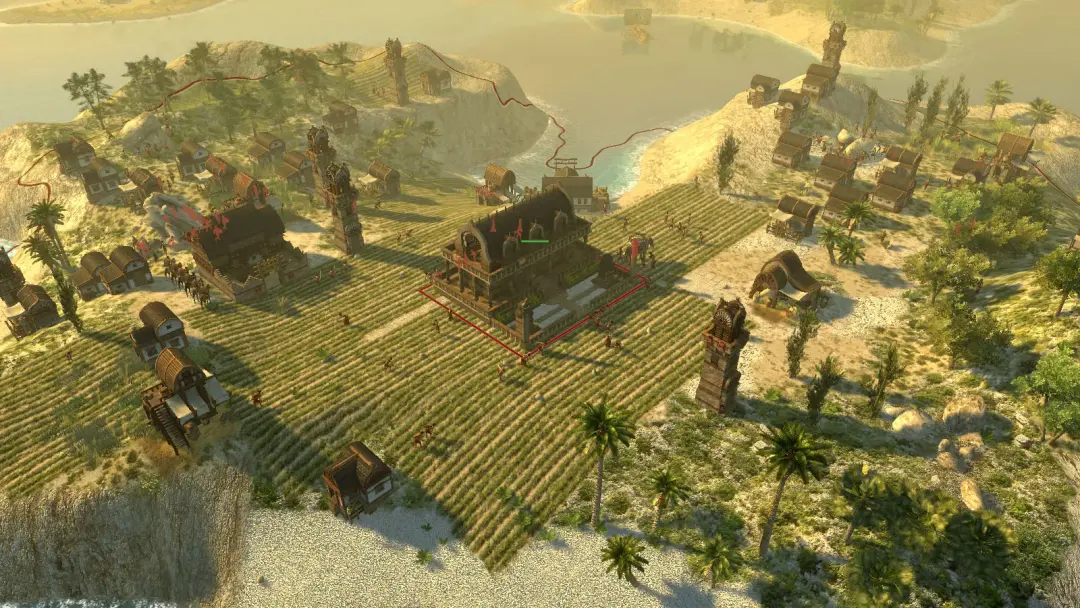
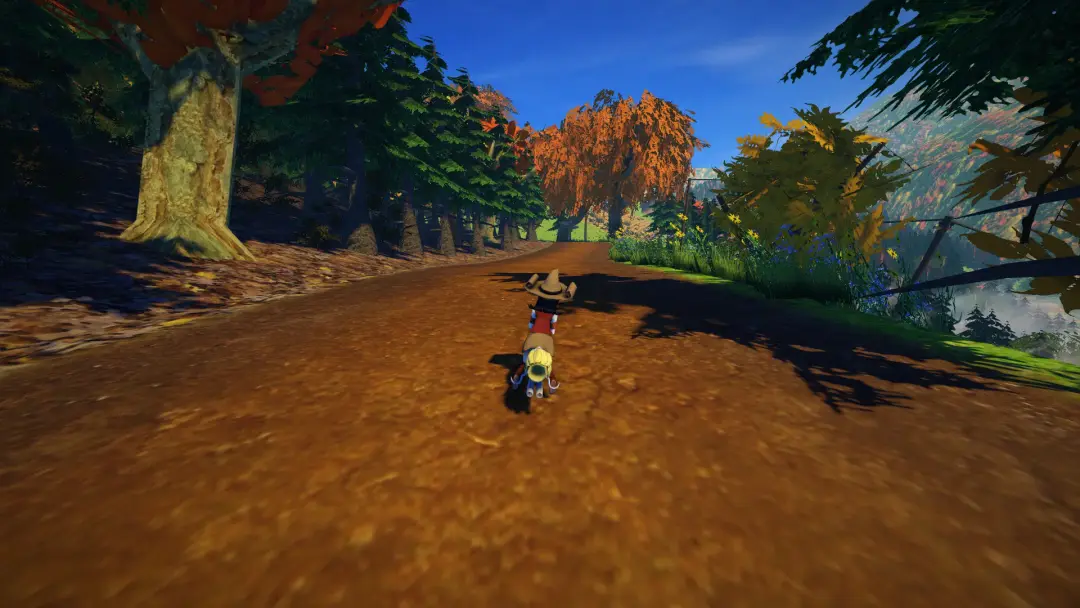
If we are pursuing the audiovisual spectacle of 3A masterpieces, I think the best ones are only the racing game SuperTuxKart, the shooter Xonotic, and the voxel game Veloren, and then… that is it.
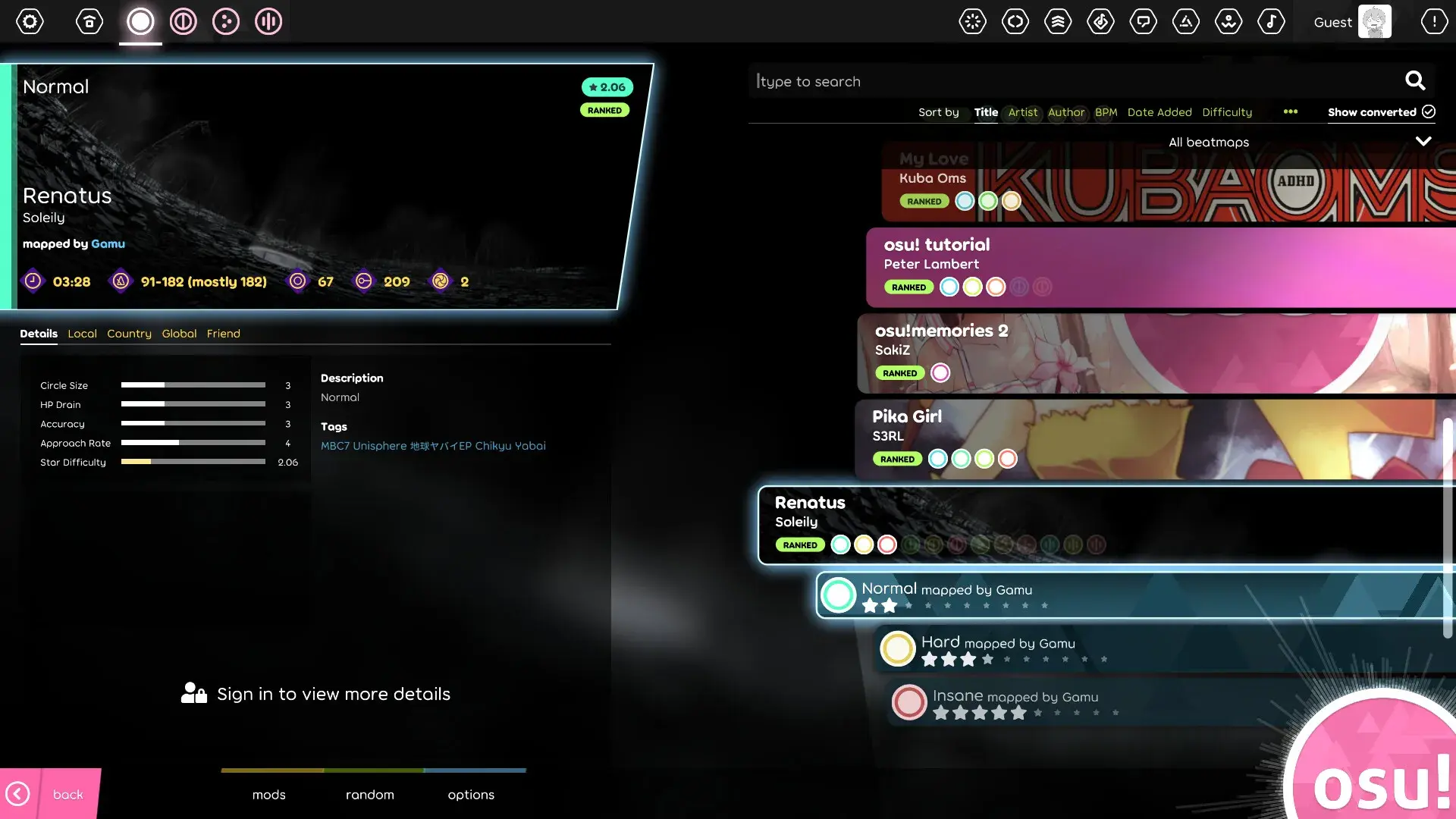
For ordinary people, the free software game they are most likely to encounter should be the rhythm game osu!, but very few people emphasize that it is open source.
In the end, only Luanti feels more interesting to me, because it has a mod API that can generate infinity from limited gameplay. Its gameplay design is very hacky, suitable for people with geek qualities.
One category of open source games is the “open source alternative”, meaning an imitation of some commercial game. Luanti belongs to this kind. Its original target of imitation was Minecraft, but later it carved out its own path. It no longer blindly copies Minecraft gameplay; everything is left to the community to decide, designing the gameplay they want. Luanti positions itself as a “game engine”, somewhat similar to the role of Unreal Engine. To encourage more games with new gameplay to appear, Luanti holds a Game Jam competition every year, encouraging more people to release interesting indie games.
But to be honest, Luanti is not very mature either. It has been developed for ten years, yet its interface still looks like Minecraft built for engineers. Even terminology such as “package manager” appears inside the game. How are ordinary people supposed to get into it!? Unfortunately, there are still piles of people who want to imitate Minecraft gameplay, and this type of mod occupies the mainstream position.
4. Before That Holy Grail Appears, Do Not Be Picky About Playing Games #
One interpretation of Linux users’ pursuit of the ideology of “freedom” is that Linux gives you the freedom of “choice”, rather than forcing others to accept your “freedom”. This should break some people’s mental ruts and prevent them from entering paranoid thinking.
The final conclusion is: software should be free, but let games off the hook! That is what I say. Playing Minecraft once in a while is not a sin!
Do not let ideology bind your own vision.
The outside world is wonderful; the outside world is helpless.
Chyi Chin - The Outside World